Mold vs Mildew: The Difference That Actually Matters
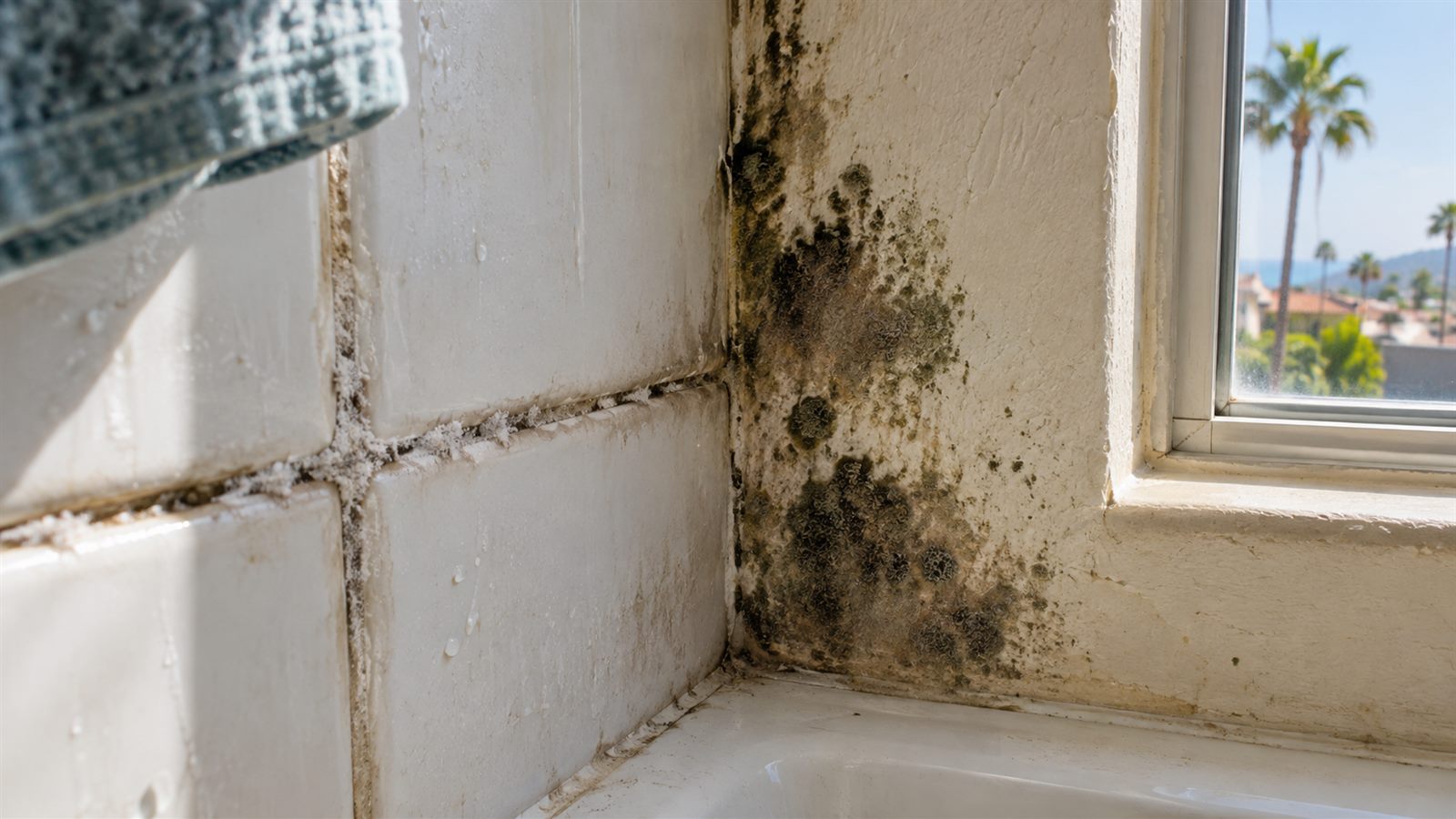
“It is just mildew” is the most common sentence in a mold dispute. Here is what is actually true, and the test that settles it in about thirty seconds.
Quick answer
What is the difference between mold and mildew? Mildew is a common name for surface-growing mold — usually flat, powdery, white or grey, and confined to the surface of a non-porous material such as tile grout or a window sill. Mold is the broader category and includes growth that penetrates into porous material. The practical difference is depth, not biology: mildew wipes off and the surface underneath is clean; mold has grown into the substrate and leaves a stain and soft or damaged material behind.
The biology, briefly
Mildew is not a separate scientific category from mold. In everyday use it describes surface-growing fungi that stay on top of a material rather than penetrating it — typically flat, powdery and white, grey or pale yellow. In horticulture the word refers to specific plant pathogens, but that is not what anyone means in a bathroom.
What people call mildew in a house is usually Cladosporium or Alternaria growing on a non-porous surface kept damp by condensation. That is mold. It is just mold in the least problematic form.
The test that settles it
Thirty seconds, no equipment.
- Put on gloves. Wipe the growth firmly with a cloth and a little detergent.
- If it comes away completely and the surface underneath is clean and sound — that is surface growth, the thing people mean by mildew. You have a humidity and ventilation problem.
- If it leaves a stain, or the material underneath is soft, discoloured, crumbling or spongy — the growth has penetrated. That is a materials problem and the water has been there long enough to get into the substrate.
Second test: press the material. Drywall that gives under a thumb, grout that crumbles, a sill that dents — all indicate the substrate is compromised, regardless of what the surface looks like.
Why the distinction matters legally
California Health and Safety Code 17920.3 makes visible mold a substandard housing condition, with an exception for minor mold on surfaces that accumulate moisture as part of their properly functioning intended use. That exception is why the ring of growth in a shower is not a code violation.
So a landlord saying “it is just mildew” is making a legally meaningful claim, not just a casual one — they are placing the condition inside that exception. The wipe test, plus a moisture reading of the material, is what determines whether that is accurate. This is one of the most common things our inspection reports resolve. See mold and tenant rights in California.
What to do in each case
Surface growth on a sound non-porous surface. Clean it yourself with detergent, a brush and an N95. Then fix the reason it was damp: verify the bathroom fan actually exhausts outside, run it twenty minutes after showers, re-caulk the moving joints with flexible sealant rather than grout, leave the shower door open after use. If it comes back within weeks, the ventilation is still inadequate.
Growth with a stain, soft material or a smell. Stop. The water is in the material and probably in the cavity behind it. Moisture map it before opening anything, and if you rent, document it and put the request in writing today.
The smell test is the other giveaway
Surface growth on tile usually has little odor. A persistent musty smell that survives cleaning means actively growing mold with a substrate to feed on — and if you cannot see a colony that would account for it, the growth is inside the assembly.
In San Diego raised-floor homes, a musty smell in the lowest rooms with nothing visible anywhere is very often the crawl space, reaching you through floor penetrations.
How to answer “it is just mildew” in writing
“It is just mildew” appears in landlord replies, HOA letters and seller disclosures because it sounds cosmetic. In the terminology that actually governs those documents it is not a distinction at all. Mildew is a colloquial word for surface growth of mold on a damp surface; it is not a separate organism with a separate legal status. California Civil Code 1941.1 addresses dampness and mold affecting habitability without distinguishing between them, and Health and Safety Code 17920.3 lists visible mold growth as a substandard condition.
The practical reply is to stop arguing about the word and document the moisture. A photograph of growth is arguable. A photograph of growth beside a moisture meter reading on the same wall, dated, is not. If the reading is elevated, the condition is dampness regardless of what anyone calls the staining — and dampness is what the statute responds to.
Why bleach is the wrong product on anything porous
Sodium hypochlorite is a water solution. On a non-porous surface — tile, glass, glazed ceramic, a fibreglass tub surround — it works, because the chlorine stays where you put it. On drywall, wood, grout or stucco the chlorine reacts at the surface while the water carries into the material, so the visible colour goes and the moisture that caused the problem is topped up. EPA guidance for homes does not recommend biocides as routine practice for mold cleanup: detergent and physical removal is the method, and drying is the part that decides whether it comes back.
There is also a safety point specific to small coastal bathrooms with weak extraction. Bleach plus any ammonia-containing cleaner produces chloramine gas, and a room that cannot clear steam cannot clear that either.
Frequently asked questions
Is mildew harmful?
Surface growth is the least concerning form of indoor mold, but dampness and mold exposure generally is associated with respiratory symptoms, cough, wheeze and worsening of existing asthma, and people with fungal allergies can react to it. The more useful framing: it is not dangerous in itself, but it is a reliable signal that the room is holding moisture above the level where more serious growth can start in materials you cannot see.
Can mildew turn into mold?
It is already mold, so the question is really whether surface growth leads to deeper growth. Not directly — surface growth does not burrow. But the conditions that allow surface growth are the same conditions that allow colonisation of porous material, so persistent mildew in a bathroom is a predictor that the wall cavity behind the shower, or the attic above a misdirected fan, is at risk.
What should I clean mildew with?
Detergent and warm water with a stiff brush, then dry thoroughly. Not bleach — it is mostly water, it adds moisture to grout and drywall, and it bleaches the stain rather than removing the organism. For silicone sealant that has growth under the surface, the sealant has to be cut out and replaced; nothing cleans it.
Is mildew a valid defence for a landlord in California?
No. Civil Code 1941.1 and Health and Safety Code 17920.3 address dampness and visible mold growth as habitability and substandard-housing conditions without recognising a separate category called mildew. Documenting an elevated moisture reading beside the growth moves the conversation from terminology to a measurable condition.
If it wipes off, do I still need to do anything?
Yes — the cause. Growth that wipes off cleanly was fed by moisture that is still there, usually humidity or shower splash with inadequate extraction. Fix the ventilation or hold indoor relative humidity under 60% and it stops returning. Clean without changing the conditions and you are on a four-to-six week cycle.
Related reading
- what happens during mold removal
- bathroom mold removal in San Diego
- types of mold in San Diego homes
- mold and tenant rights in California
Need help with this in San Diego? We provide Mold Removal Process in San Diego across all 34 service areas. Free phone consultation, 24/7 — (858) 400-3506.